
You are about to swap a token on a familiar DeFi site, but the transaction will use a different network from the one you used yesterday. The wallet asks you to approve a contract, then shows a preview of what may happen if you proceed. That preview can make the decision clearer, but it is not a guarantee that the transaction will succeed or that the market will stand still. For US-based DeFi users moving among networks, the useful question is not simply whether a wallet simulates transactions. It is what the simulation observes, what assumptions it makes, and what remains outside its view.
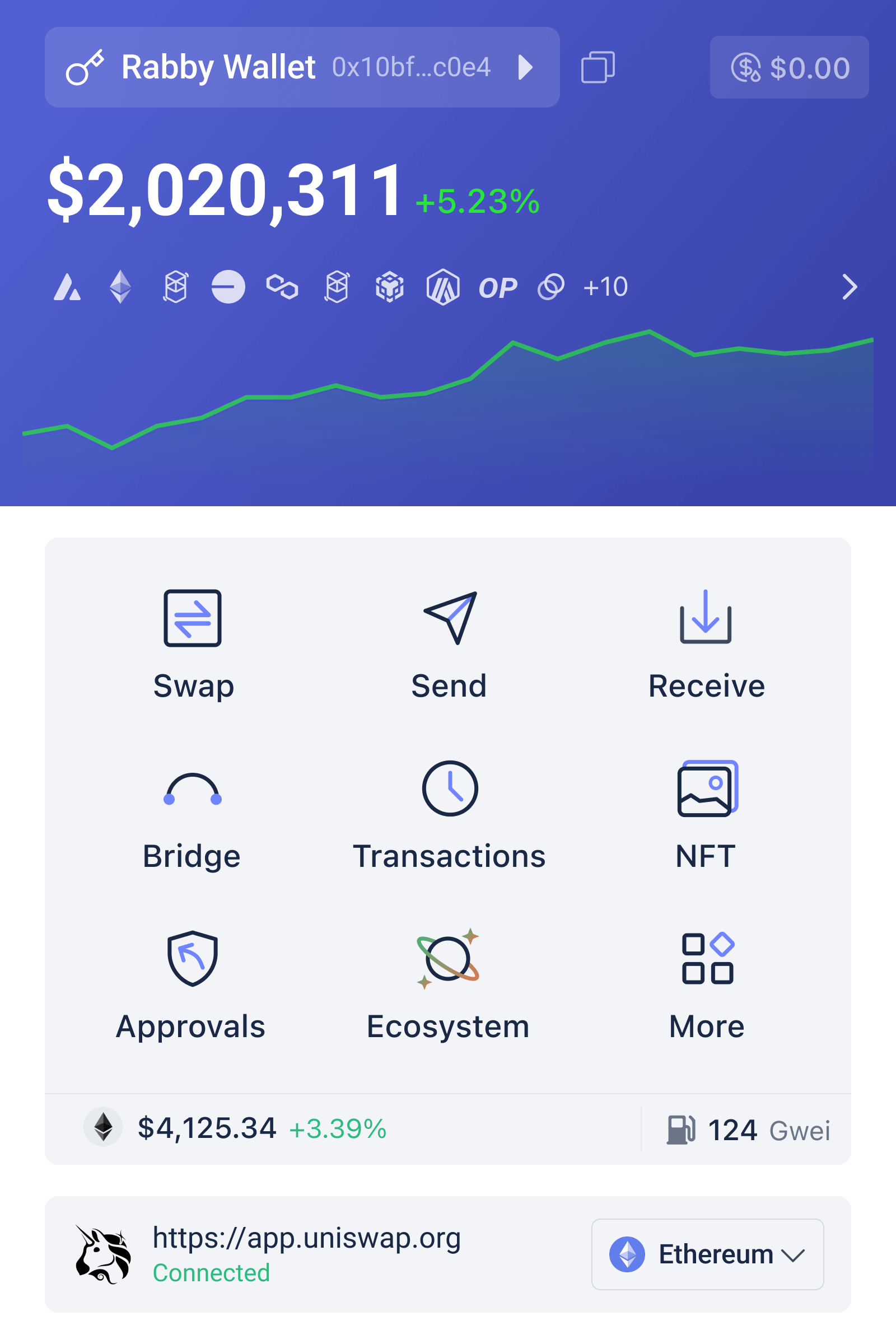
Rabby is a browser wallet designed for interacting with decentralized applications across multiple chains. Its transaction-preview approach is best understood as a decision aid: it can help translate a complex contract call into expected asset changes and flag some risks before a user signs. Comparing that model with a basic wallet prompt—and with independent transaction inspection—reveals both its practical value and its boundaries.
What a transaction simulation actually does
A blockchain transaction is more than a button click. A decentralized application (dapp) prepares data describing an action, such as swapping tokens or supplying collateral. The wallet receives that proposed transaction and may ask a node to execute it against a representation of the chain’s current state. This process, commonly called simulation, estimates the effects without broadcasting the transaction as a confirmed state change.
The wallet can then present a human-readable interpretation: which assets are expected to leave the account, which may arrive, and whether the call appears likely to fail. That is materially different from displaying only a contract address and raw transaction data. A preview gives the user a chance to notice an unexpected token transfer, a suspicious approval, or a result that does not match the action they intended.
But the preview is conditional. It reflects a particular transaction, chain state, and simulation environment at a particular moment. After the preview, the user still has to sign, the transaction must be included in a block, and the relevant contract state may change. Price movement, competing transactions, liquidity changes, or a protocol’s own rules can make the final outcome differ from the estimate.
Three ways to review a transaction
A basic wallet confirmation is the simplest approach. It may show the network, destination, and requested token or contract interaction, but the user often has to infer what the call means. This can be adequate for familiar, low-risk actions when the user understands the dapp and checks the details. Its weakness is interpretive burden: raw data is difficult to assess, especially when a transaction bundles several contract calls.
A wallet with transaction simulation adds an estimated outcome before signing. Rabby’s value proposition is this additional layer of interpretation across supported chains and dapps. A user can compare the expected changes with the action they initiated rather than relying solely on the dapp’s interface. This can reduce avoidable mistakes, but a readable preview is not an independent audit of the application, nor does it prove that a contract is safe.
The third approach is separate inspection: checking a transaction through a block explorer, reading contract details, or using specialist analysis tools. These methods can offer more raw detail or another perspective, but they demand more time and technical judgment. They also do not eliminate uncertainty. A sensible workflow is layered rather than exclusive: use the wallet preview for routine interpretation, then seek additional verification when the action is unusual, high-value, or difficult to reverse.
Why multi-chain context changes the risk
“Multi-chain” can sound like one wallet experience spread across different networks. In practice, each chain has its own state, transaction rules, assets, and infrastructure. The same token name may refer to different contracts on different networks; a balance on one chain does not automatically mean the same asset is available on another. A transaction preview is useful only if the user is reviewing the intended chain and the correct asset and contract.
Network switching introduces a subtle operational risk: users may carry expectations from one chain into another. Fees, liquidity, contract behavior, and the path a dapp uses to complete an action can differ. Simulation can expose some consequences of the proposed call, but it cannot resolve every question about whether a token is authentic, whether a bridge is trustworthy, or whether a protocol’s economic assumptions are sound.
For users who want to install Rabby, use the project’s official distribution channels and verify the extension and publisher before granting permissions. A starting point for reviewing the rabby wallet extension is to confirm that the download source is the one you intended. Installation is only the first step: a wallet can help interpret transactions, but it cannot protect a recovery phrase that is disclosed or a signature the user knowingly approves.
How to read a preview without treating it as a verdict
Start with intent. Ask what you expect to happen: which token should be spent, which asset should be received, and whether the action should create an allowance or move funds into a protocol. Then compare that expectation with the preview. A mismatch is a reason to pause, not a prompt to assume the wallet has found a definitive exploit.
Next, separate outcome from permission. A swap preview may show the expected result of one transaction, while an approval can authorize a contract to use tokens later. The immediate simulation of an approval does not necessarily describe every future use of that permission. Review the scope and spender carefully, especially when an unfamiliar dapp requests broad or persistent access.
Finally, consider reversibility and consequence. A small test transaction may be reasonable when interacting with a new application, but it is not a guarantee of safety: the later transaction can use different parameters or encounter a changed state. For a large position, a new protocol, or a complex bundled call, slow down and verify the chain, contract, token, and requested signature through more than one source where practical.
Where simulation can break down
Simulation is an estimate, not a promise of execution. A transaction that appears successful in a preview can fail when submitted because the state changes, fees or execution conditions shift, or the transaction’s assumptions no longer hold. Conversely, a warning can be difficult to interpret without knowing whether it reflects a real danger, a simulation limitation, or an unusual but legitimate contract pattern.
There is also a trust boundary. The wallet’s display depends on the transaction data it receives, the infrastructure used to simulate it, and the quality of its interpretation. Users should not treat a green or reassuring interface as proof that a dapp is reputable or that a contract has no vulnerabilities. Simulation is strongest at answering a narrow question—“what does this proposed call appear to do under these conditions?”—not the broader one, “is this entire financial decision safe?”
For US users, the practical implication is the same whether interacting with a lending market, a decentralized exchange, or a bridge: take responsibility for the transaction and the risks of the application. Wallet features can improve visibility, but they do not remove market risk, contract risk, or the possibility of loss. As simulation tools become more integrated into wallet workflows, the useful signal to watch is not merely whether a preview exists, but whether it explains uncertainty and makes unexpected permissions or asset movements easier to recognize.
A reusable decision rule
Use a three-part check before signing: network—is this the intended chain? Effect—do the displayed asset movements and permissions match your purpose? Confidence—is the action familiar and proportionate, or does it warrant independent verification? If any answer is unclear, do not let a simulation substitute for understanding. The preview is a map of an expected path, not the territory of a changing blockchain.
Frequently asked questions
Does transaction simulation guarantee that a transaction will succeed?
No. It estimates what a proposed transaction may do against a particular view of chain state. Conditions can change before inclusion, and execution can still fail or produce a different result.
Does a simulation prove that a dapp or smart contract is safe?
No. It can help explain a transaction’s expected effects, but it is not a security audit or a judgment about a protocol’s reliability, economic design, or long-term behavior.
When should I seek a second check?
Consider additional verification when the transaction is unfamiliar, high-value, difficult to reverse, uses a new chain or protocol, or requests permissions that seem broader than the action requires.